
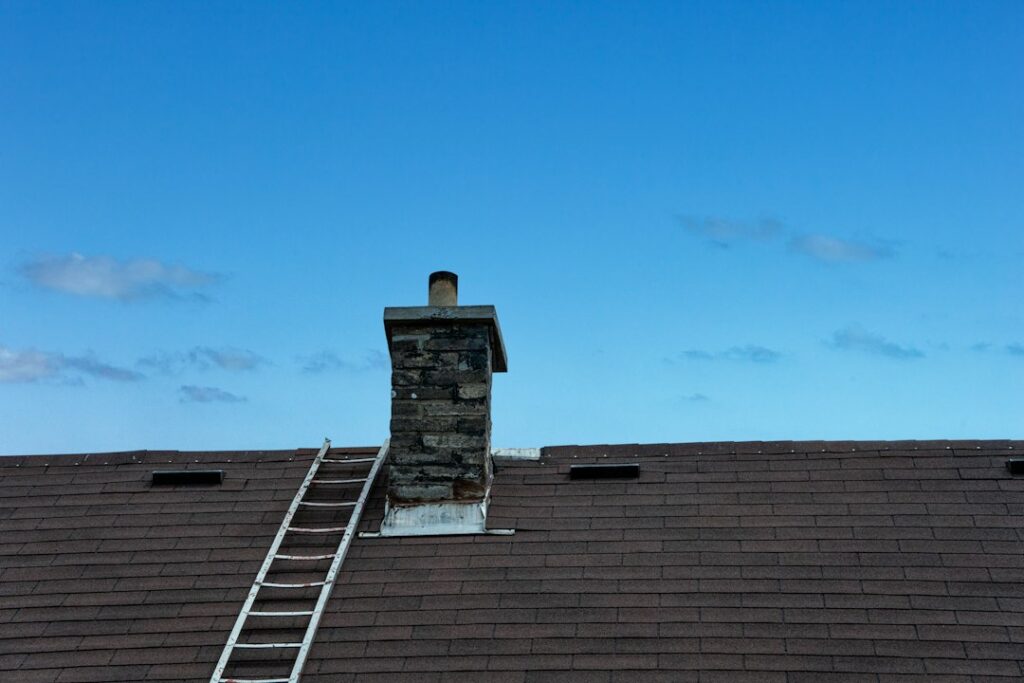
A roof cricket is a small raised structure built on the uphill side of a chimney or another wide roof penetration. Its purpose is to divide the flow of rain, melting snow, and ice so water moves around the obstruction instead of collecting behind it.
For homes in Homer, NY, this detail can be especially useful because roofs regularly face snow, freezing temperatures, wind-driven rain, and repeated freeze-thaw cycles. Although a cricket may not be visible from the ground, it can play an important role in keeping a roof assembly dry.
What is a roof cricket?
A roof cricket, sometimes called a saddle, is a peaked or sloped roof structure installed behind a chimney. It resembles a small secondary roof ridge. The high point is typically aligned with the chimney, allowing water and snow to shed toward both sides.
A cricket is usually framed over the roof deck and then covered with roofing material and carefully integrated flashing. Depending on the roof design, it may be covered with shingles, metal, membrane roofing, or another compatible material.
The cricket is not part of the chimney itself. It is part of the roof drainage and weatherproofing system around the chimney.
Why is a cricket needed behind a chimney?
A chimney interrupts the normal downhill path of water. Without a cricket, rain and melting snow can collect on the uphill side, creating a small ponding area where the chimney meets the roof.
That trapped moisture can cause several problems:
- Deteriorated flashing
- Water stains on ceilings or upper walls
- Rotting roof sheathing
- Wet insulation
- Mold growth in concealed areas
- Damage to rafters or framing
- Premature roof-covering failure
A cricket changes the shape of the roof so water is directed around the chimney rather than forced against it. It also reduces the amount of snow that can remain packed against the uphill side of the masonry or metal chimney.
Modern residential code provisions generally call for a cricket or saddle on the ridge side of a chimney or other penetration wider than 30 inches when measured across the roof slope. Local code requirements can depend on the applicable code edition, the type of roof, and the building’s design.
How does a roof cricket work in winter?
A cricket does not prevent snow from accumulating on a roof. Instead, it helps control where snow and meltwater collect.
During a winter storm, snow may build up on the uphill side of a chimney. When temperatures rise, the lower layers can begin melting while the upper snow remains in place. A properly shaped cricket helps direct that meltwater toward the sides of the chimney and into the roof’s normal drainage path.
In Homer, winter conditions can shift between snow, rain, sleet, freezing rain, and thawing temperatures. Those changes place stress on roof intersections. Water that repeatedly freezes and expands around poorly flashed areas can widen small gaps and loosen materials over time.
A cricket can reduce this exposure, but it is not a substitute for sound flashing, proper roof slope, adequate attic ventilation, or safe snow-management practices.
Is a cricket the same as chimney flashing?
No. A cricket and flashing perform different jobs, although they work together.
The cricket shapes the roof surface and redirects water. Flashing seals the joints where the chimney meets the roof. Counterflashing, which is attached to or built into the chimney, overlaps the base flashing and helps prevent water from entering behind it.
A chimney can have a cricket and still leak if the flashing is poorly installed, damaged, corroded, or covered by roofing material in a way that prevents proper drainage. Likewise, high-quality flashing may still be challenged by a chimney that creates a large area where snow and water collect.
The intersection between the cricket, chimney, and roof covering requires careful detailing. Open seams, exposed fasteners, cracked sealant, and improperly lapped metal are common warning signs.
Do all chimneys need a cricket?
Not every chimney requires one. The need depends on the chimney’s size, location, roof slope, and relationship to the roof ridge.
A narrow chimney may not meet the size threshold commonly used in residential code provisions. A chimney that reaches the roof ridge may also have a different drainage arrangement because water is not being trapped against a broad uphill wall in the same way.
Crickets are more likely to be useful when a chimney is:
- Broad across the roof slope
- Located well below the ridge
- Positioned on a low-slope roof
- Surrounded by a large area where snow can accumulate
- Exposed to heavy runoff from the upper roof plane

Skylights, roof-mounted equipment, and other wide penetrations may also require a raised saddle or a manufacturer-approved drainage design. The exact solution should match the roof system and the applicable building requirements.
What does a roof cricket look like?
From above, a cricket usually appears as a small triangular or ridged structure behind the chimney. From the side, it has a sloped face that rises toward the chimney and falls toward the roof on either side.
On a shingle roof, it may be covered with matching shingles, metal, or a combination of materials. On a metal roof, the cricket may be formed with compatible metal panels and seams. On a low-slope roof, it may be part of a membrane-covered assembly.
A cricket should look integrated with the surrounding roof rather than like a separate object sitting loosely on top of it. The edges should be properly flashed, and water should have a clear path around both sides.
What signs may indicate a cricket or flashing problem?
Roof leaks do not always appear directly behind the chimney. Water can travel along roof decking, framing, insulation, or interior finishes before becoming visible.
Possible signs include:
- Brown or yellow ceiling stains near the chimney
- Dampness in the attic after rain or snowmelt
- Soft or discolored roof sheathing
- Damaged masonry joints near the roofline
- Rusted or separated flashing
- Shingle deterioration on the uphill side of the chimney
- Ice buildup repeatedly forming behind the chimney
- Musty odors or damp insulation
A leak that appears only during certain wind directions or thawing conditions may still originate at the chimney intersection. Interior staining may remain visible long after the roof has dried, so the timing of the moisture is useful information when investigating the cause.
What should homeowners understand about maintenance?
A cricket is a long-term roof detail, but it still needs periodic observation. From the ground, residents can look for displaced shingles, visible metal damage, heavy debris, or recurring ice buildup near the uphill side of a chimney. Attic inspections can reveal damp sheathing or staining before interior damage becomes extensive.
Walking on a steep, icy, or snow-covered roof is hazardous. Chimney areas can also be difficult to access safely, especially after winter storms. Any inspection involving unstable roofing, electrical hazards, structural damage, or active leaks may require qualified assistance for safety and accurate diagnosis.
The most important point is that a cricket works as part of a complete roof intersection. Its shape, covering, flashing, chimney connection, and surrounding roof materials must all direct water away from the structure. A raised section alone does not guarantee protection if the drainage path is blocked or the flashing is incomplete.
